
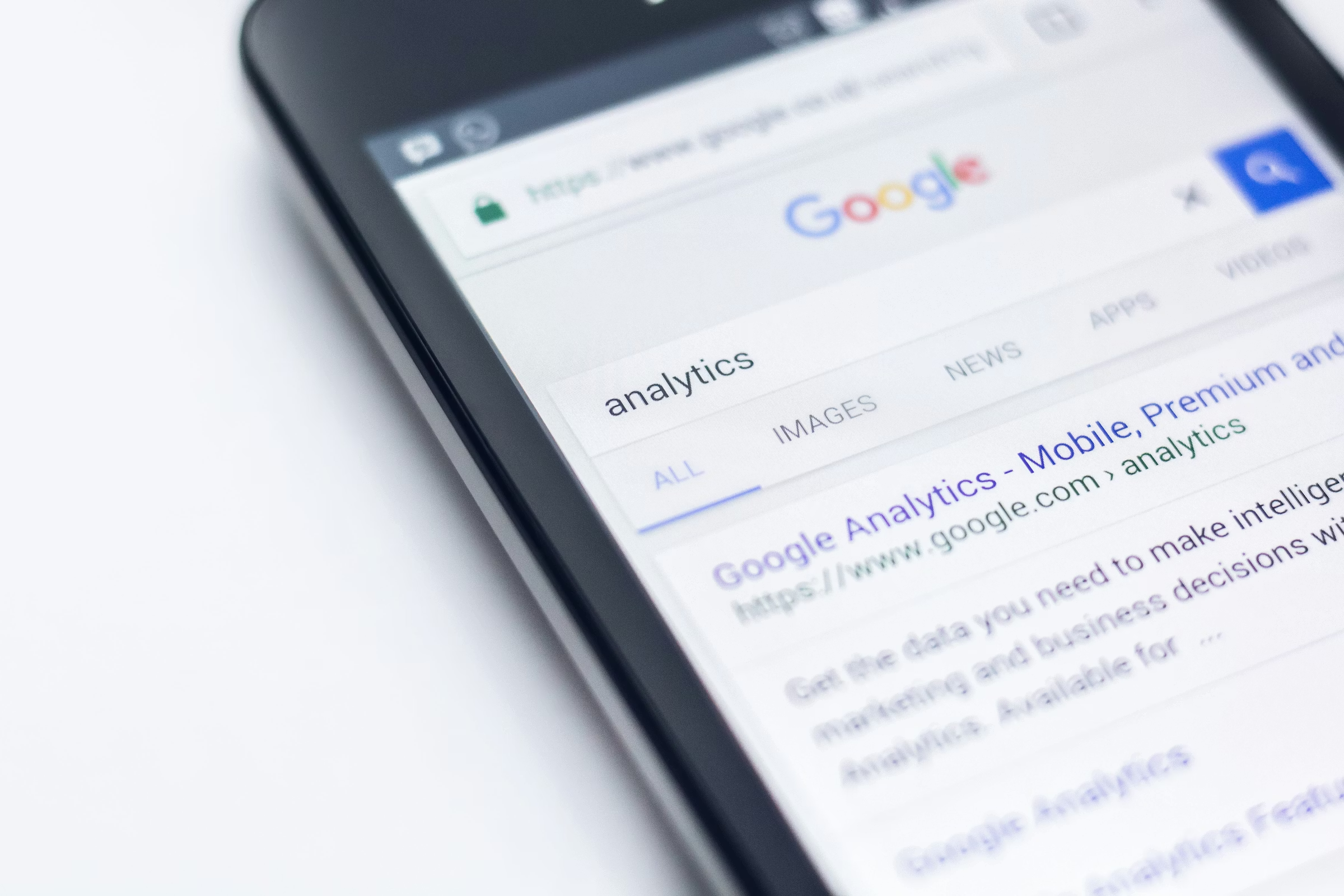
For two decades the goal was simple: rank on the first page of Google. Earn the blue link, win the click. That game still matters, but it is no longer the whole board. A growing share of buyers never see a page of results at all. They ask ChatGPT which CRM to buy, they ask Gemini for the best accountant in Sydney, they ask Siri to book the highest-rated plumber nearby. The answer arrives pre-chewed, and most of the ten links that used to fight for attention are simply never shown.
Answer Engine Optimization (AEO) is the discipline of being the source those systems trust enough to quote. It is not a replacement for SEO. It is what SEO becomes when the interface stops being a list and starts being a sentence.
Why the loudest brand no longer wins
Traditional search rewarded authority and volume: more backlinks, more pages, more domain weight. Answer engines reward something subtly different: clarity. When a model assembles a recommendation, it favours content it can parse cleanly, attribute confidently, and defend. A small business with sharply structured, genuinely useful pages often gets referenced more often than a larger competitor hiding behind vague marketing copy.
We have watched a local clinic with well-organised treatment explanations and honest FAQs get surfaced ahead of a national chain. The chain had more traffic. The clinic had more answers.
What AEO actually changes
The foundations of good SEO still hold: fast pages, clean architecture, real topical authority. AEO layers a second question on top of every page: could a machine lift this and be confident it is right? That pushes you toward explicit structure, conversational phrasing, and content that answers the question a human would actually voice out loud.
The AEO checklist
- Structured data and schema so machines know what each block is
- Conversational headings that mirror how people ask, not how marketers write
- Entity clarity: make it unambiguous who you are and what you do
- FAQ and Q&A formatting that answer engines can quote verbatim
- Topical depth around a few subjects rather than thin coverage of many
The honest caveat
Nobody can fully predict how answer engines will evolve; Google's own results keep shifting under everyone's feet. But the businesses adapting early are building an advantage that compounds, the same way the early SEO adopters did fifteen years ago. The downside of preparing for a future that arrives slightly differently is small. The downside of being invisible the day your category goes conversational is not.
If your strategy still ends at "rank for keywords," it is already a half-step behind the way your customers search today.